Please fill out the form below to request a quote or to request more information about us. please be as detailed as possible in your message, and we will get back to you as soon as possible with a response. we're ready to start working on your new project, contact us now to get started.
Choosing the Right Pet Travel Trolley for Short- or Long-Haul Flights
2026-09-15
Sanan Pet
24
When it comes to air travel, pets are treated with the utmost care, but their comfort and safety shouldn’t be left to chance. Packing the right tools for your pet’s journey is essential, and one of the most important items you should consider is a pet travel trolley. Whether you’re flying for a short business trip or an extended vacation, a well-chosen trolley can make all the difference for both you and your furry companion. In this guide, we’ll explore everything you need to know about choosing the best pet travel trolley for your next flight.
Before diving into the specifics of choosing a trolley, it’s important to understand why one is necessary. Many people assume that as long as their pet stays inside the airline’s carry-on bag, they’re safe. However, this isn’t always the case. Pets can get wet, scratch, or even stress excessively during long flights, leading to discomfort or worse. A pet travel trolley provides a secure, dry environment for your pet, ensuring they’re comfortable and stress-free during transit.
In addition to safety, a trolley can also save time at the airport. Instead of searching for your pet in a crowded area, you can easily locate your trolley and retrieve your furry friend quickly. Furthermore, many airlines have strict regulations regarding pet allowances, and using a trolley can help you stay compliant with these rules.
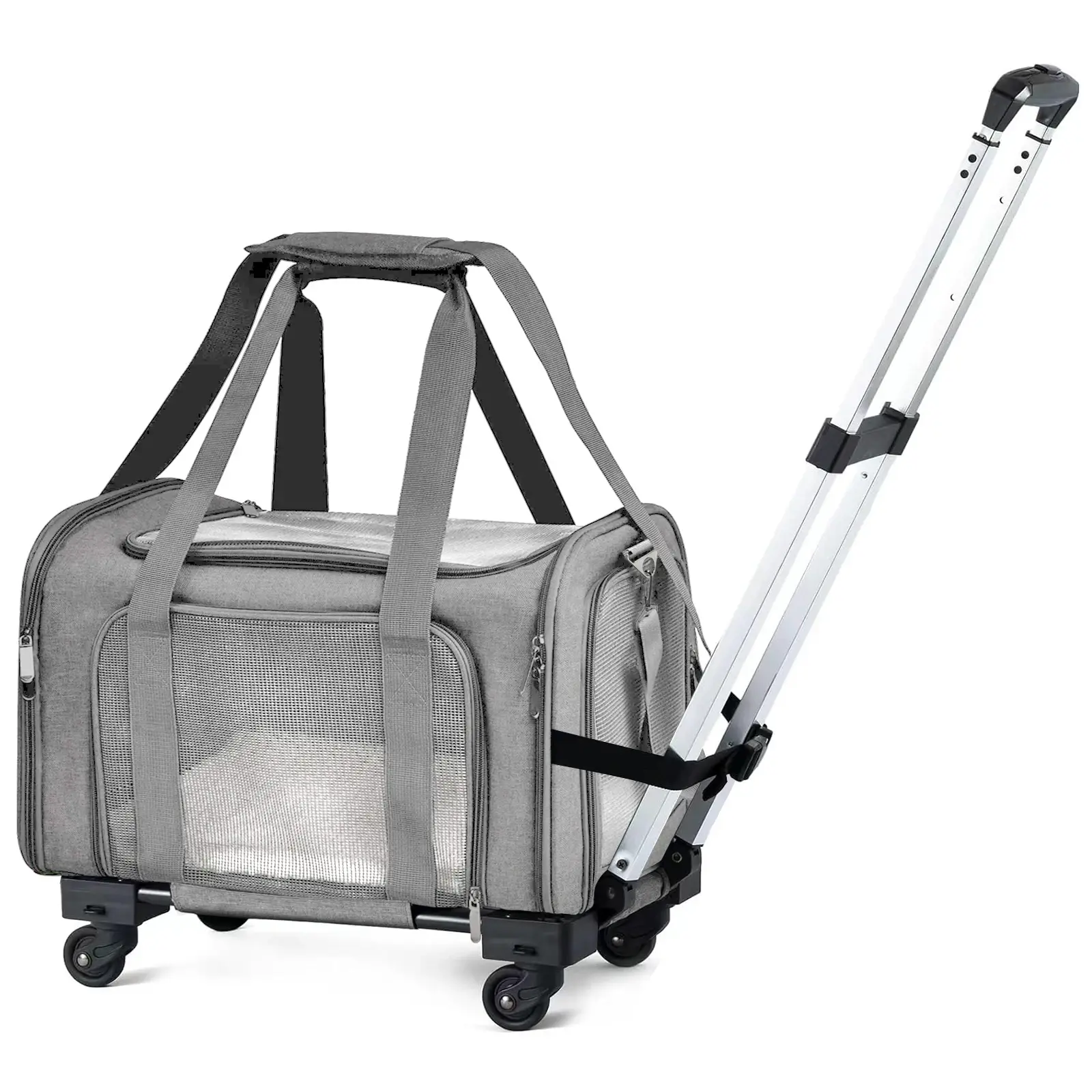
As you weigh your options, it’s important to note that there are foldable and hard-walled trolleys to choose from. Each has its own set of advantages and disadvantages, so understanding your needs is key.
Factors to Consider When Selecting a Pet Travel Trolley
When it comes to selecting a pet travel trolley, there are several factors to keep in mind to ensure it meets your needs. Here are some of the most important considerations:
Size and Weight Capacity: The size of your pet’s trolley should be proportionate to their size. Too small, and it won’t hold them comfortably; too large, and it may not be practical for airport use. Similarly, the weight capacity is crucial to prevent the trolley from breaking under the strain of a heavy pet.
Ventilation: A well-ventilated trolley is essential, especially during long flights when your pet may start to overheat. Look for trolleys with open designs or fans to ensure airflow.
Material Quality: The trolley should be made of durable, high-quality materials that can withstand rough handling during airport transfers. Avoid cheap or synthetic materials, as they may not hold up over time.
Adjustable Compartment: Many trolleys come with adjustable compartments, which can be particularly useful for separating your pet’s toys, food, or other items. This feature ensures your pet stays organized and comfortable.
Stability: A trolley with a low center of gravity is more stable, especially during uneven airport surfaces. This can help prevent tipping over, which is a concern for older or larger pets.
Compliance with Airline Regulations: Some airlines have specific requirements for pet travel trolleys, such as size limits or weight restrictions. Be sure to research your airline’s policies and verify that your trolley meets their standards.
Types of Pet Travel Trolleys: Foldable vs. Hard-Walled
There are two main types of pet travel trolleys: foldable and hard-walled. Each has its own set of advantages and disadvantages, so understanding your needs is key to making the right choice.
Foldable Pet Travel Trolleys
Foldable trolleys are designed to be compact and easy to carry. They’re ideal for situations where space is limited, such as when traveling with a small pet or during short flights. These trolleys are lightweight and easy to fold, making them convenient for storage in suitcases or overhead compartments.
However, foldable trolleys may not be the best option for longer flights or for pets that require more space. Their compact design can sometimes limit airflow, making them less comfortable for pets during extended trips.
Hard-Walled Pet Travel Trolleys
Hard-walled trolleys, on the other hand, offer a more spacious and comfortable environment for your pet. These trolleys are typically larger and heavier, but they’re perfect for providing ample room for larger pets or during long flights. They’re also more durable, making them a better investment for families with older or heavier pets.
While hard-walled trolleys are more spacious, they can be less practical for short trips or situations where space is a premium. However, their durability and space-saving features make them a popular choice for many pet owners.
The choice between foldable and hard-walled trolleys ultimately depends on your specific needs, including the length of your flight, the size of your pet, and your budget.
Comfort Features to Ensure Your Pet's Well-Being
Comfort is key when traveling with pets, and a good trolley can help ensure your furry friend stays comfortable during the journey. Here are some features to look for:
Padding and Support: High-quality padding on the seat and wheels can provide extra support for your pet’s discomfort during long flights. Look for trolleys with thick, durable padding.
Heating: Some pets can get quite cold during long flights, so a trolley with a heating feature is a lifesaver. Check if the trolley comes with a built-in heater or if you can add one.
Adjustable Compartment: As mentioned earlier, an adjustable compartment can help keep your pet’s belongings organized and prevent tangling. This feature is particularly useful for separating your pet’s toys, food, or other items.
Padding Under the Seat: A trolley with padding under the seat can help reduce the risk of your pet rolling around or damaging the seats during transit.
Durable Materials: High-quality materials are essential to ensure the trolley lasts for years of use. Look for trolleys made from durable, weather-resistant materials.
Weight Distribution: A trolley with a good weight distribution is less likely to tip over, especially during uneven surfaces. This can help ensure your pet stays safe and comfortable.
Safety and Compliance with Airline Regulations
As mentioned earlier, safety is a top priority when traveling with pets. Many airlines have specific requirements for pet travel trolleys, and failing to comply can lead to your pet being confiscated or your trip being delayed.
Here are some safety considerations to keep in mind:
Size and Weight Limits: Most airlines have strict size and weight limits for pet travel trolleys. Make sure your trolley fits within these limits. Check with your airline in advance to avoid any issues.
Compliance Certificates: Some airlines require a compliance certificate to confirm that your trolley meets their standards. Be sure to carry this certificate with you during your trip.
Tie Down Straps: While not a feature of the trolley itself, tie-down straps are often required by airlines to secure your pet during transit. Check with your airline to see if they are needed.
Baggage Allowances: Some airlines allow you to carry your pet travel trolley in your checked baggage, while others require you to check it separately. Be sure to confirm this with your airline.
By understanding and adhering to these safety guidelines, you can ensure your pet’s travel experience is both safe and enjoyable.
Practical Tips for Using Your Pet Travel Trolley
To maximize your trolley’s effectiveness, here are some practical tips to keep in mind:
Prepare Your Pet Ahead of Time: Before your trip, ensure your pet is familiar with the trolley. Spend some time training them to sit, lie down, and use the trolley’s controls. This will help reduce stress during the actual flight.
Pack Essentials: Along with your trolley, pack all the essentials your pet needs for the journey, such as toys, food, water, and a small first-aid kit. This will help you stay organized and ensure your pet has everything they need.
Stay Calm: Stress can make your pet more anxious, so try to stay calm throughout the trip. A happy and relaxed pet is much more comfortable during long flights.
Check the Trolley’s Condition: Before your trip, make sure the trolley is in good condition. Check for any damage or loose parts, and ensure the trolley’s wheels are in good working order.
Inspect the Compartment: Ensure the compartment is free of any loose items that could cause tangling or discomfort for your pet.
By following these tips, you can ensure your pet’s travel experience is both safe and enjoyable.
Real-Life Case Studies: Successful Pet Flights with Travel Trolleys
Case Study 1: Sarah, a frequent traveler with her Cavalier King Charles Spaniel, faced the challenge of finding a trolley that would keep her dog comfortable during long flights. After researching, she discovered a hard-walled trolley with a heating feature that proved to be a lifesaver. The trolley’s padded seat and wheels provided extra comfort, and the heating feature kept her dog warm during the 6-hour flights. As a result, Sarah was able to enjoy stress-free travel with her beloved pet.
Case Study 2: John, a business traveler with a box-tailed erflein fox, chose a foldable trolley with a spacious compartment and a heating feature. The trolley’s compact design made it easy to carry, and the heating feature ensured his fox stayed warm during short 2-hour flights. John was able to use the trolley effectively and even shared it with another traveler, who was impressed by its space-saving capabilities.
These case studies highlight the importance of selecting the right trolley for your specific needs. Whether you’re traveling for business or leisure, a well-chosen trolley can make all the difference for your pet’s comfort and your travel experience.
Budget-Friendly Options and Cost Considerations
While it’s important to invest in a quality pet travel trolley, budget is often a limiting factor. Fortunately, there are options available at varying price points to suit any budget. Here are some cost considerations to keep in mind:
Basic Models: For pets that don’t require extra features, basic trolleys are a cost-effective option. They are designed to hold pets comfortably and are often sufficient for short flights or smaller pets.
Mid-Range Models: Mid-range trolleys offer a good balance of features and quality. They often come with adjustable compartments, heating features, or spill-proof technology, making them ideal for families with pets that require more comfort.
Premium Models: For pets that are older, larger, or require extra space, premium trolleys are a great investment. These trolleys often come with advanced features like automatic controls, spill-proof technology, or even a built-in heating system.
Used Options: If you’re looking to save money, consider purchasing a used trolley. Many sellers offer trolleys in excellent condition, and the cost can be significantly lower than new models.
Quality vs. Quantity: Always prioritize quality over quantity. A well-made trolley will last for years of use, unlike cheaper models that may break down after a few years of heavy use.
By keeping these budget considerations in mind, you can find a trolley that meets your needs without breaking the bank.
Conclusion
Choosing the right pet travel trolley is essential for ensuring your furry friend’s comfort and safety during air travel. Whether you’re flying for a short trip or an extended journey, a well-chosen trolley can make all the difference. By considering factors like size, weight capacity, ventilation, and safety compliance, you can select a trolley that meets your specific needs. Additionally, incorporating features like padding, heating, and adjustable compartments can enhance your pet’s travel experience. Remember to check airline regulations and stay calm during the trip to ensure your pet’s well-being. With the right trolley in hand, your pet can enjoy a stress-free and enjoyable journey, just like you.
Table of Contents
GET IN TOUCH WITH Us